

From Wrongful Conviction to Legal Advocate: Calvin Duncan Visits California Western
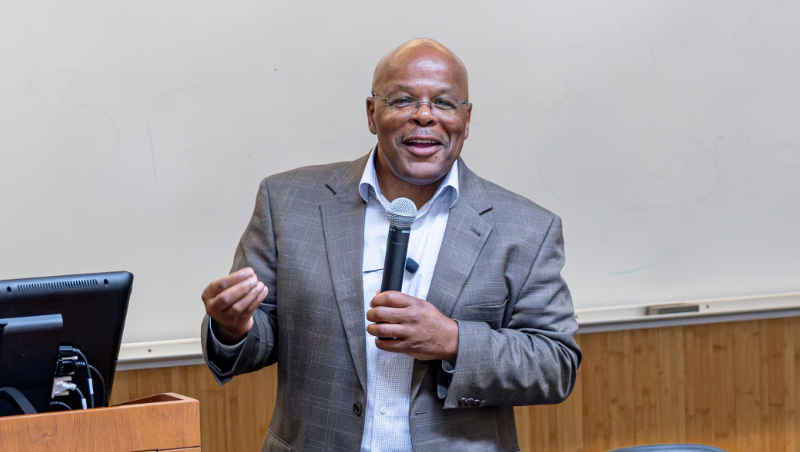
The California Western Innocence and Justice Clinic (formerly California Innocence
Project) recently welcomed acclaimed legal advocate, educator, and author Calvin Duncan
for a conversation about wrongful conviction, access to justice, and the transformative
power of legal education.
The event drew a large audience of students, faculty, alumni, legal professionals,
and community members eager to hear Duncan’s extraordinary story. In conversation
with Professor Amy Kimpel, Associate Dean of Experiential Education and Executive
Director of the California Western Innocence and Justice Clinic, Duncan reflected
on his nearly three decades spent incarcerated in Louisiana prisons for a crime he
did not commit and the path that ultimately led him to become a law student, educator,
and nationally recognized advocate for incarcerated people.
As detailed in his memoir, The Jailhouse Lawyer, while serving a sentence of life without parole, Duncan began teaching himself the
law and helping hundreds of fellow incarcerated individuals challenge wrongful convictions,
unjust sentences, and prison conditions. His efforts went on to contribute to landmark
U.S. Supreme Court decisions that helped define the boundaries of reversible prosecutorial
misconduct in Smith v. Cain 565 U.S. 73 (2012) and declared the use of non-unanimous juries as unconstitutional
in Ramos v. Louisiana 590 U.S. 83 (2020).
“What makes Calvin Duncan’s story stand out is that it’s so much more than just a
story of his own exoneration,” said Innocence and Justice Clinic Executive Director
Amy Kimpel. “It’s a story of his journey from a person impacted by a deeply flawed
criminal legal system to a person capable of using the law as vehicle to empower both
himself and his community—the other men he was incarcerated with in Angola Prison.”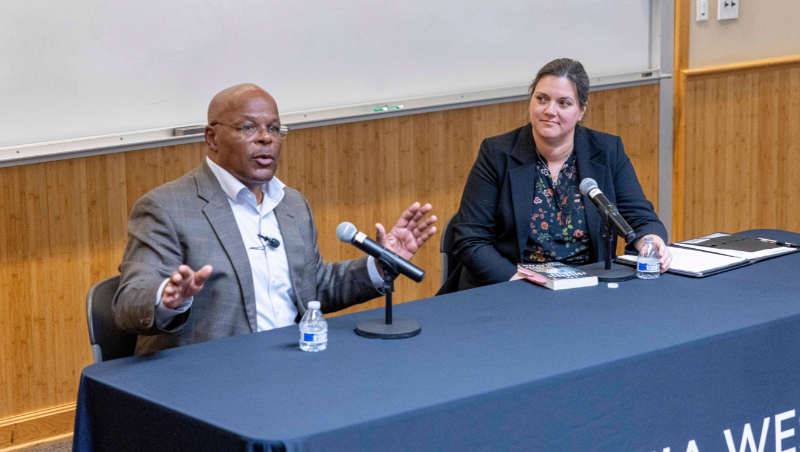
Calvin Duncan in conversation with Innocence and Justice Clinic Executive Director Amy Kimpel.
Throughout the discussion, Duncan emphasized the law as a powerful tool for pursuing
justice, and that going to law school provides people with that power. He emphasized
that many of the amendments in the Bill of Rights exist to protect individuals accused
of crimes. Duncan spoke on the barriers incarcerated people face when attempting to
access legal resources and court records, and the procedural obstacles that often
prevent legitimate claims from being heard.
The conversation also explored the historical roots of many inequities within the
criminal legal system. Drawing from his own experience in Louisiana, Duncan discussed
policies rooted in racial discrimination, including Louisiana's long-standing practice
of allowing non-unanimous jury verdicts in certain felony cases, which remained in
place until it was ruled unconstitutional in 2020.
“Attending Calvin’s event was a very emotional experience,” said 2L Innocence and
Justice Clinic student Victoria Lara. “Because of his lived experiences, he was able
to speak with such conviction and passion. His plea to the students, staff, and faculty
there was also inspiring as he urged everyone to use their power, privilege, and legal
education to help others and “pass along” the knowledge we get for the good of others.”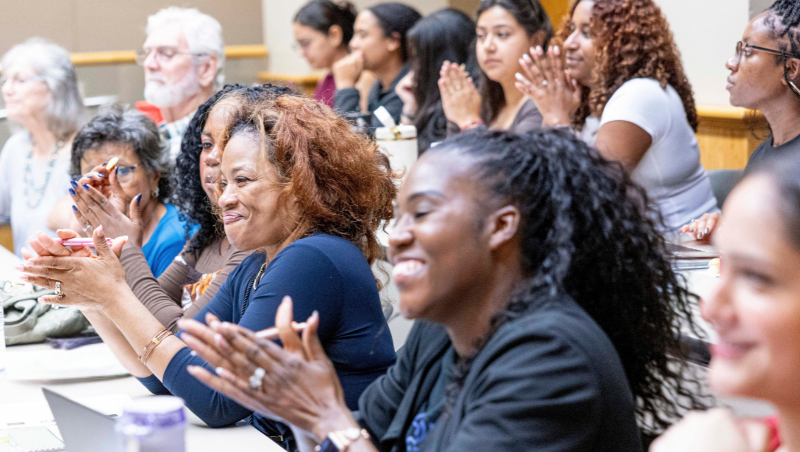
Another key message from Duncan’s story was about community and collaboration. He
described how meaningful legal change often depends on people working together to
uncover injustice and advocate for themselves.
Attendees were also able to participate in a lively question-and-answer session and
continue conversations with Duncan following the event.
This visit from Calvin Duncan offered more than a firsthand account of one man's remarkable
journey. It was an opportunity to reflect on the role the law and lawyers can play
in advancing justice, challenging systemic barriers, and ensuring that the protections
promised by the law are accessible to everyone.
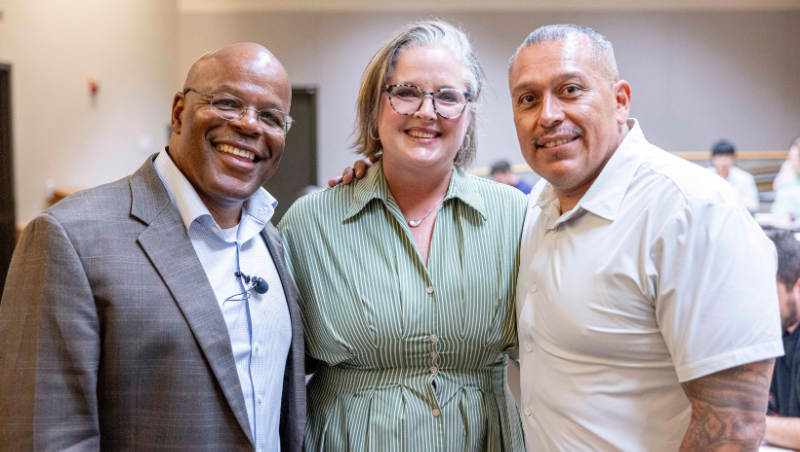 Calvin Duncan with Associate Director of the Innocence and Justice Clinic Lindsey
Mercer and Miguel Solorio, an exoneree and former client of the clinic.
Calvin Duncan with Associate Director of the Innocence and Justice Clinic Lindsey
Mercer and Miguel Solorio, an exoneree and former client of the clinic.